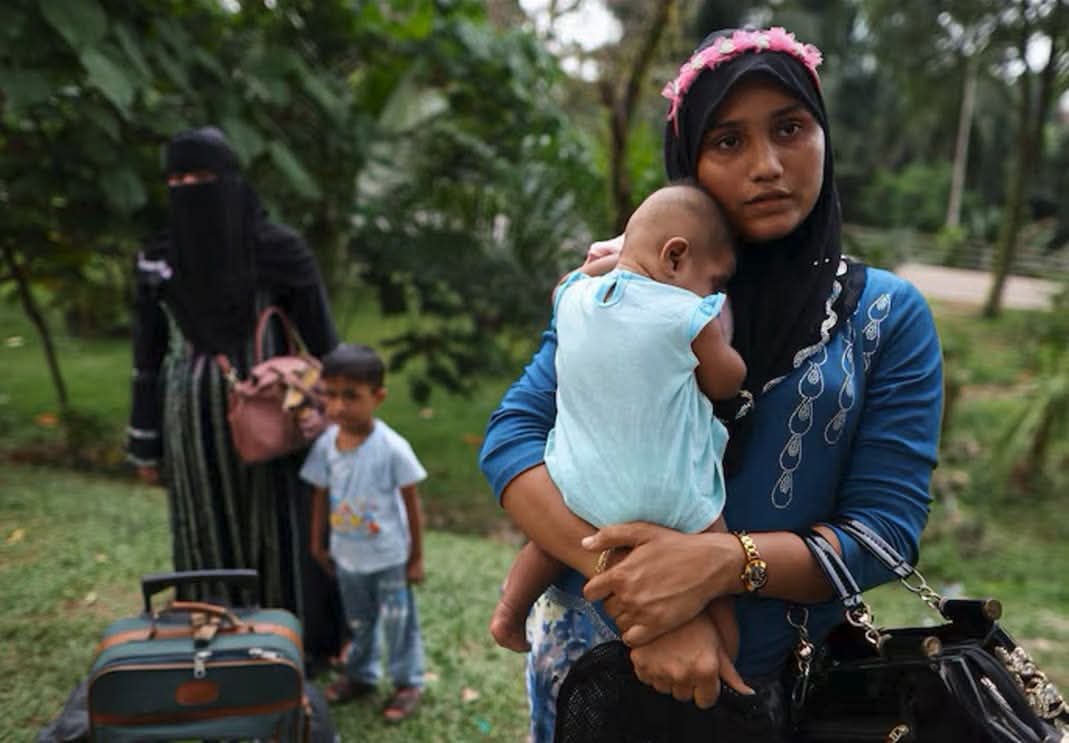
The Malaysian government plans to repatriate 1,476 Myanmar nationals, including Muslim refugees living in Malaysia, to Myanmar on September 29 as the first batch, according to reports.
The repatriation plan is the first phase of an agreement between the governments of Malaysia and Myanmar to gradually repatriate around 5,000 Myanmar nationals currently in Malaysia, according to a statement issued by Malaysia’s Ministry of Home Affairs on August 27.
The first batch of 1,476 people was selected by the Myanmar side and will be transported to Myanmar using two Myanmar Navy vessels and one hospital ship.
However, detailed information on how many of the 1,476 people are Muslim refugees and how many are Chin, Karen, Mon and other ethnic groups has not yet been released by either the Malaysian or Myanmar authorities.
In particular, no detailed plan has been announced regarding where the Myanmar Muslim refugees will be placed after their return, or what arrangements will be made for their security and basic living needs.
According to Malaysia’s Ministry of Home Affairs, 10,388 Myanmar nationals were being held at immigration detention centres across Malaysia as of August 15.
The Malaysian authorities are continuing to verify the personal information and refugee status of those detained and aim to complete the process by the end of this year.
Myanmar refugees living in Malaysia include Muslim refugees as well as members of the Chin, Karen, Mon and other ethnic communities, according to information released by the Malaysian authorities.
According to UNHCR figures as of the end of February, around 215,600 refugees and asylum seekers were registered in Malaysia, with the majority originating from Myanmar.
UNHCR data also shows that Myanmar nationals in Malaysia include Muslim refugees, Chin ethnic people and members of other ethnic communities from conflict-affected areas.
Meanwhile, the Malaysian government is implementing a new registration system known as the Refugee Registration Document (DPP) to manage refugees and undocumented migrants in the country.
Under the new system, Malaysian authorities will directly collect and record registration and biometric information. The system will cover not only UNHCR cardholders but also undocumented residents and people who identify themselves as refugees.
The Malaysian government has said the new registration system is aimed at managing demographic conditions in the country, strengthening national security and reducing illegal activities.
However, human rights and refugee organisations have expressed concerns over the Malaysian government’s direct collection of refugees’ personal and biometric information.
UNHCR has also said that the absence of a clear legal framework protecting refugees in Malaysia leaves them vulnerable to arrest, detention, labour exploitation and discrimination.
Against this backdrop, the planned return of Myanmar nationals, including Muslim refugees who have lived in Malaysia for years, has raised concerns over their security, accommodation and access to basic necessities after returning to Myanmar.
Under the current Malaysian government plan, the first batch of 1,476 Myanmar nationals will be repatriated on September 29. Additional individuals will be selected based on eligibility criteria and their willingness to return voluntarily.
Ref: Malaysia Home Ministry / UNHCR.