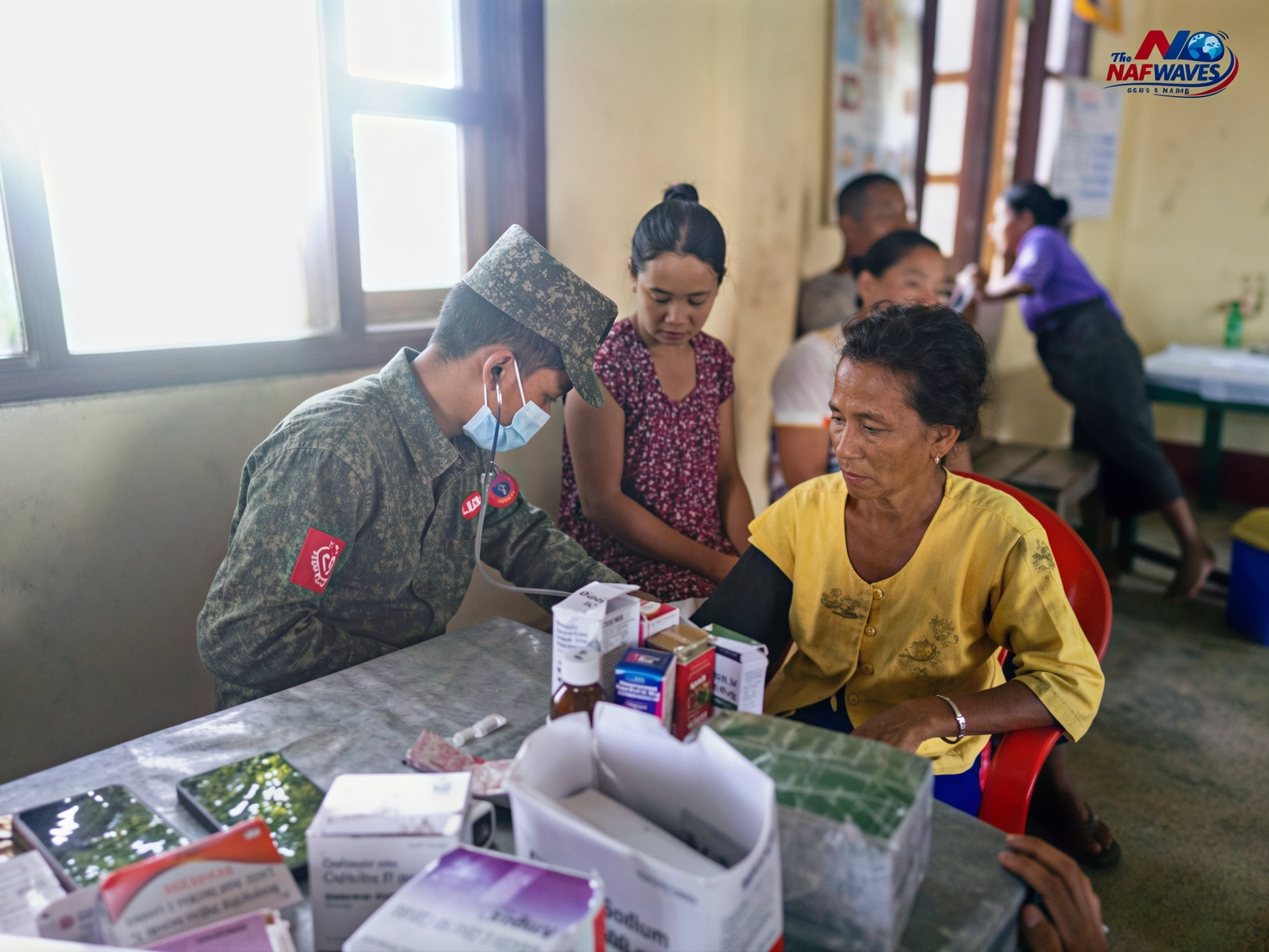
The Arakan Army (AA) has continued providing free mobile healthcare services and public health awareness programs to internally displaced persons (IDPs) and local communities across Maungdaw District since April 25, according to local sources.
AA medical teams have reportedly carried out outreach missions in several villages, including Pyin Chaung (Chakma) and Inn Chaung (Chakma) in Buthidaung Township, where access to healthcare remains limited. During the visits, residents received free medical consultations, treatment, and basic healthcare support.
In addition to providing medical services, healthcare personnel conducted awareness campaigns on dengue fever prevention, skin diseases, diarrheal illnesses, and personal hygiene practices aimed at reducing the spread of common diseases in rural communities.
According to local reports, medical teams from the Arakkha Health Department, working alongside AA medical personnel, provided free treatment and essential medicines to more than 50 residents of Pyin Chaung Village on June 9. Beneficiaries reportedly included pregnant women and patients suffering from diarrhea, skin diseases, and other general health conditions.
The outreach program comes as health authorities monitor a growing number of dengue fever cases across Arakan. Despite ongoing prevention efforts by the Arakkha Health Department, the region recorded its first hospitalized dengue patient of 2026 on April 28.
Health officials reported that dengue infections have gradually increased in several townships, including Ramree, Mrauk-U, Rathedaung, Minbya, and Myebon. As of June 10, a total of 33 dengue patients had been hospitalized across those areas.
Data released by the Arakkha Health Department showed that Arakan recorded 2,452 dengue fever cases and eight related deaths in 2025. Mrauk-U Township reported the highest number of infections with 946 cases, followed by Minbya Township with 704 cases. Dengue fever cases were reported in nearly all townships across the region.
The continued healthcare outreach efforts are aimed at improving access to medical services for vulnerable communities while supporting disease prevention and public health awareness in areas with limited healthcare infrastructure.
Photo: The Naf Waves