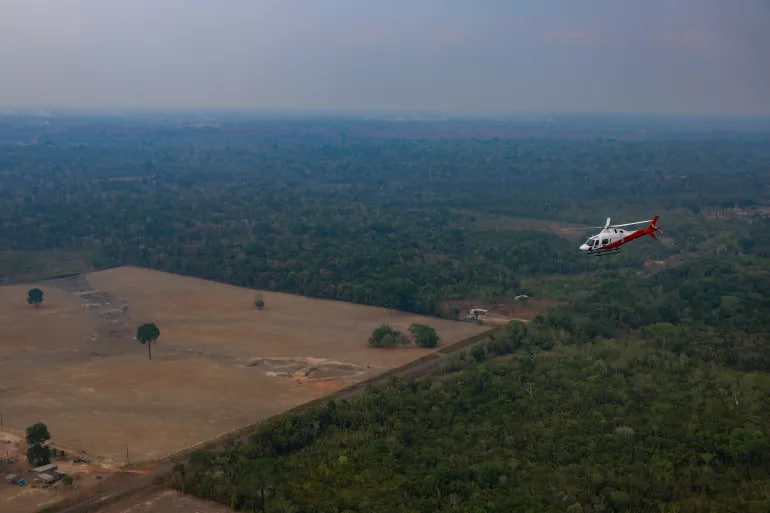
Deforestation in Brazil’s Amazon rainforest has fallen to its lowest level since records began in 1988, according to official data from Brazil’s National Institute for Space Research (Inpe). A total of 3,335 square kilometres of forest was cleared in the 12 months through July 2026, representing a 42 percent decrease from the same period a year earlier.
According to Inpe’s Prodes satellite monitoring programme, the previous record low was 4,571 square kilometres in 2011–2012. The latest figures indicate a further decline in deforestation, surpassing the previous record.
Brazilian Environment Minister João Paulo Capobianco described the decline as an extraordinary achievement, saying it was “like a dream”.
Márcio Astrini of the climate advocacy group Observatório do Clima also described the figures as a historic achievement. He said they demonstrated that deforestation and greenhouse gas emissions could be reduced with political will and effective action.
President Luiz Inácio Lula da Silva pledged to end illegal deforestation by 2030 when he took office in 2023. During the 2019–2022 administration of his predecessor, Jair Bolsonaro, the Amazon rainforest lost an average of approximately 11,600 square kilometres of forest annually, nearly 60 percent more than during the preceding four years.
Since 2022, deforestation has declined every year, falling by a total of 71.2 percent over four years. According to the French news agency AFP, increased forest monitoring and tougher penalties for illegal logging have contributed significantly to the decline.
Deforestation in the Cerrado savanna region south of the Amazon also decreased by approximately 24 percent, reaching 5,517 square kilometres. This was the lowest level recorded since monitoring began in 2001.
Although the decline in deforestation in Brazil reflects the effectiveness of environmental protection policies and monitoring and enforcement measures, continued efforts are still needed to completely eliminate illegal deforestation.
Source: AFP.