Dengue cases are rising rapidly across Bangladesh, prompting authorities to strengthen prevention and control measures in Khulna, Barisal and Chittagong, according to the Directorate General of Health Services (DGHS).
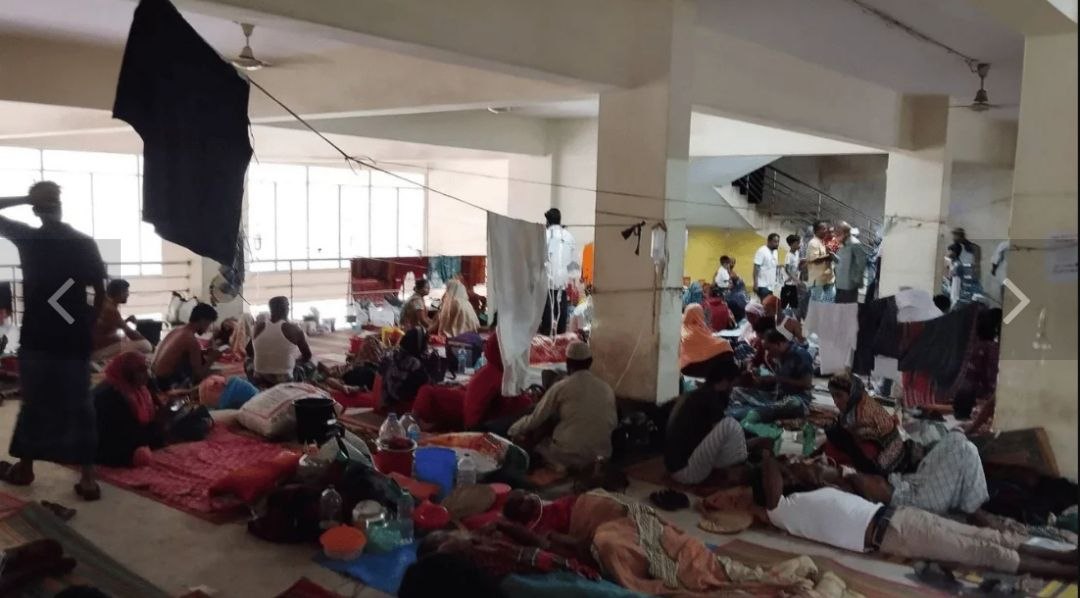
According to the latest DGHS data, 988 dengue patients were admitted to hospitals across the country in the past 24 hours, while two patients died during the same period. The number of dengue cases reported so far this year has reached 41,032, with the death toll standing at 113.
Khulna Division has recorded the highest number of cases, with 6,487 patients admitted and 19 deaths reported so far. Barisal has recorded 6,379 cases, while Chittagong has reported 6,178 cases.
Dhaka Division has recorded 6,017 cases, followed by Dhaka South City Corporation with 5,400 cases and Dhaka North City Corporation with 4,895. Mymensingh has reported 2,267 cases, Rajshahi 2,230, Rangpur 1,005 and Sylhet 184.
Professor Dr Nurul Islam, director of the hospital division at DGHS, said authorities are closely monitoring the situation as dengue cases continue to rise in Khulna, Barisal and Chittagong.
“Cases are comparatively increasing in Khulna, Barisal and Chittagong. Therefore, directions are being given every day to the concerned city corporations and civil surgeon offices through Zoom meetings,” he said.
Authorities have instructed officials to identify and eliminate Aedes mosquito breeding sites in high-risk areas and conduct mobile court operations. Regular insecticide spraying has also been ordered in the morning and afternoon.
Government hospitals have been instructed to keep additional beds ready in case the number of patients continues to increase.
Professor Dr Foyara Tasnim, additional director general of Planning and Development at DGHS, said dengue testing facilities have already been ensured at government hospitals. A maximum testing fee has also been fixed for private hospitals to prevent patients from being charged excessive fees.
Dengue corners have been ordered at both government and private hospitals, while saline, diagnostic kits and other necessary medical supplies are reportedly available in sufficient quantities.
Professor Dr Kabirul Bashar, an entomologist at Jahangirnagar University, said Aedes mosquitoes are present in most urban areas of Bangladesh, creating conditions for dengue transmission.
However, he said the presence of a high mosquito population does not necessarily mean dengue outbreaks will begin simultaneously in all areas.
“If a dengue-infected person enters an area, local Aedes mosquitoes can acquire the virus from that person and later transmit it to others. This is how dengue can spread rapidly within a short period,” he explained.
Bashar also said insecticide spraying alone is not sufficient to control Aedes mosquitoes, as many breeding sites are difficult to reach. He recommended using insect growth regulator (IGR) tablets in permanent breeding sites, such as water meter holes, to suppress mosquito reproduction for several months.
In Khulna, the city corporation has deployed an additional 155 spray workers across 31 wards. Larvicide and adulticide spraying operations are also continuing.
Morning and afternoon fogging is being carried out around designated dengue hospitals to prevent mosquitoes from spreading from hospital areas. Cleaning bushes, drains and canals, removing stagnant water and regular spraying are also continuing, including on holidays.
In Barisal, authorities are conducting mobile court operations, cleaning drains and canals, and carrying out joint drives with the health department.
In some areas of Pirojpur, large numbers of Aedes larvae have been found in stagnant water collected inside the trunks of coconut and areca nut trees. Special spraying operations are being conducted in those areas.
In Chittagong, eight of the city's 41 wards have been identified as dengue hotspots through a joint survey conducted by the city corporation, civil surgeon's office and health department.
A special 60-member team has been formed and trained to conduct operations in the hotspots.
Another 192 areas have been identified as red zones, where morning and afternoon insecticide spraying, mobile court operations and public awareness campaigns using loudspeakers are being conducted.
Insecticide is also being sprayed within a 500-metre radius of the homes of dengue patients, said Sarful Islam Mahi, mosquito control officer of Chittagong City.
“We are leaving no stone unturned in taking the necessary measures to prevent dengue,” he said.
Ref: Bangladesh Media.