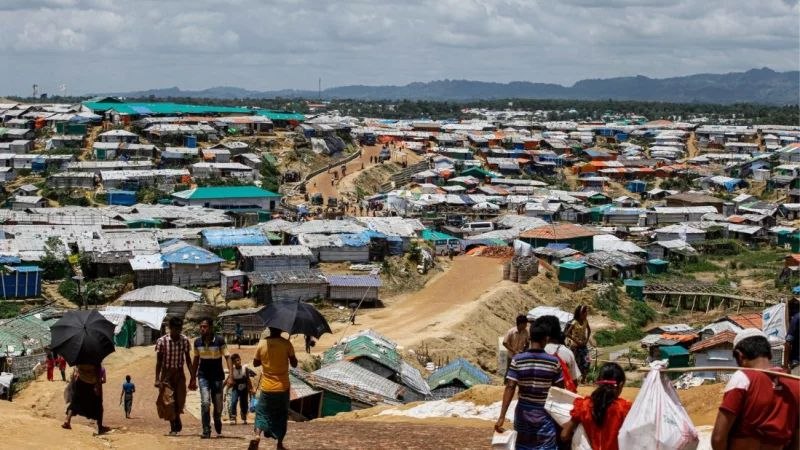
Dengue fever cases continue to remain high in Muslim refugee camps in Cox’s Bazar District, Bangladesh, with more than 2,500 cases recorded so far this year and six deaths reported as of September, according to health authorities.
The figures were included in a dengue situation report released by the Cox’s Bazar District Health Department on September 13.
According to the report, a total of 3,856 dengue cases were recorded across Cox’s Bazar District from January 1 to September 13 this year. Of these, 2,507 cases were reported from Muslim refugee camps. All six dengue-related deaths recorded during the period were also from the camps.
Health officials said dengue fever is now being reported in several upazilas across Cox’s Bazar District.
As of September 13, among the local population, Teknaf Upazila recorded the highest number of cases, with 332 patients, of whom 294 were hospitalized.
Other upazilas reported 268 cases in Maheshkhali, 261 in Chakaria, 195 in Ukhia, 95 in Cox’s Bazar, 58 in Eidgaon, 53 in Ramu, 14 in Pekua, 13 in Kutubdia, 17 in the municipal area and 43 in other areas.
At present, 35 dengue patients are receiving treatment at different hospitals in Cox’s Bazar. Of them, 22 are being treated at Cox’s Bazar District Hospital. Four patients are receiving treatment in Maheshkhali, three in Teknaf, three in Chakaria, two in Ukhia and one in Pekua.
According to the Health Department’s records, as of August 29, a total of 2,507 dengue cases had been reported in Muslim refugee camps, with 2,505 patients requiring hospitalization.
Dr. Abu Toha Mohammad Rejwanul Haque Bhuiyan, Chief Health Coordinator at the Office of the Refugee Relief and Repatriation Commissioner in Cox’s Bazar, said that 135 new dengue cases were detected in the camps during the current week.
He also said that five camps have relatively high dengue infection rates compared with their populations.
The infection rate was 1.61 percent in Nayapara RC Camp, 0.81 percent in Camp-14, 0.34 percent in Camp-26, 0.31 percent in Camp-19 and 0.12 percent in Camp-4 Extension.
According to Dr. Abu Toha, overcrowding in the camps, inadequate drainage systems and stagnant water accumulating in various areas during the monsoon season are creating favorable conditions for the breeding of Aedes mosquitoes, which transmit dengue fever.
Although the monsoon season is nearing its end, the continued detection of new dengue cases in the camps has raised ongoing concerns over dengue prevention and control measures.
Ref: Bangladesh Media