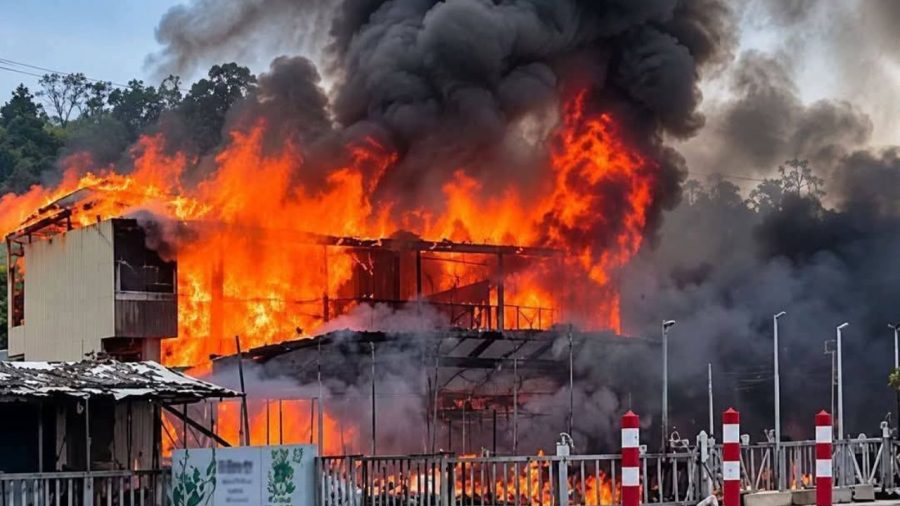
The Rohingya refugee crisis in Bangladesh is putting pressure on the country’s environment and economy, while also contributing to drug trafficking, smuggling and various other criminal activities, Bangladesh Army Chief General Waker-Uz-Zaman said.
General Waker-Uz-Zaman made the remarks on August 20 at the graduation ceremony of a three-week Capstone Course held at the National Defence College at the Mirpur Cantonment. At the event, he also identified the Rohingya crisis, border security, relations with neighbouring countries, the armed conflict in the Chittagong Hill Tracts and the energy crisis as major challenges facing Bangladesh.
“The Rohingya issue is causing environmental degradation in the region and putting significant pressure on the national economy. In addition, drug trafficking, smuggling and various other forms of crime are also taking place,” Bangladeshi media quoted him as saying.
The Rohingya refugee crisis has become a long-term humanitarian and security challenge for Bangladesh. Since 2017, hundreds of thousands of Rohingya have fled Myanmar’s Rakhine State, with the majority living in refugee camps in Cox’s Bazar District, near the Bangladesh-Myanmar border.
Because of the region’s geographical location, security authorities and researchers have long been monitoring links between routes used to smuggle drugs from Myanmar into Bangladesh and criminal networks operating in and around the refugee camps.
Security conditions inside the camps have also become increasingly complicated due to extortion, kidnapping, human trafficking, drug dealing and power struggles among armed groups. However, such criminal activities should not be attributed to the entire Rohingya community, but rather understood as the actions of particular armed groups, criminal networks and individuals operating within the camps.
The environmental impact of the Rohingya refugee camps has also become another major concern for Bangladesh. The establishment of densely populated refugee settlements has required the use of land and forest areas, while increased demand for housing, fuel and infrastructure has placed additional pressure on local natural resources and the environment.
At the same time, hosting the Rohingya refugees has placed a significant financial burden on the Bangladesh government and international humanitarian organisations, particularly in providing food, healthcare, education, shelter and security. As a result, Bangladeshi authorities increasingly view the Rohingya crisis not only as a humanitarian issue but also as a long-term challenge affecting the country’s economy and national security.
Data related to drugs and crime also indicate that the refugee camps face significant security challenges. According to a study published in 2025, 462 Rohingya were arrested in drug-related cases between 2017 and June 2024, while more than 1.3 million yaba tablets were seized during the same period. The study also reported the presence of criminal networks involved in drug trafficking, extortion, kidnapping and violence in the camps.
Source: somoynews.tv