The Humanitarian and Development Coordination Office (HDCO) of the Arakan People's Revolutionary Government (APRG) on June 16 released an evidence-based assessment report examining the fighting that took place in Htan Shauk Khan Village, Buthidaung Township, between May 2 and May 4, 2024.
According to HDCO, the report is not solely intended as a response to findings published by Human Rights Watch (HRW), but rather as a comprehensive review of the military and civilian circumstances before, during, and after the clashes in the village.
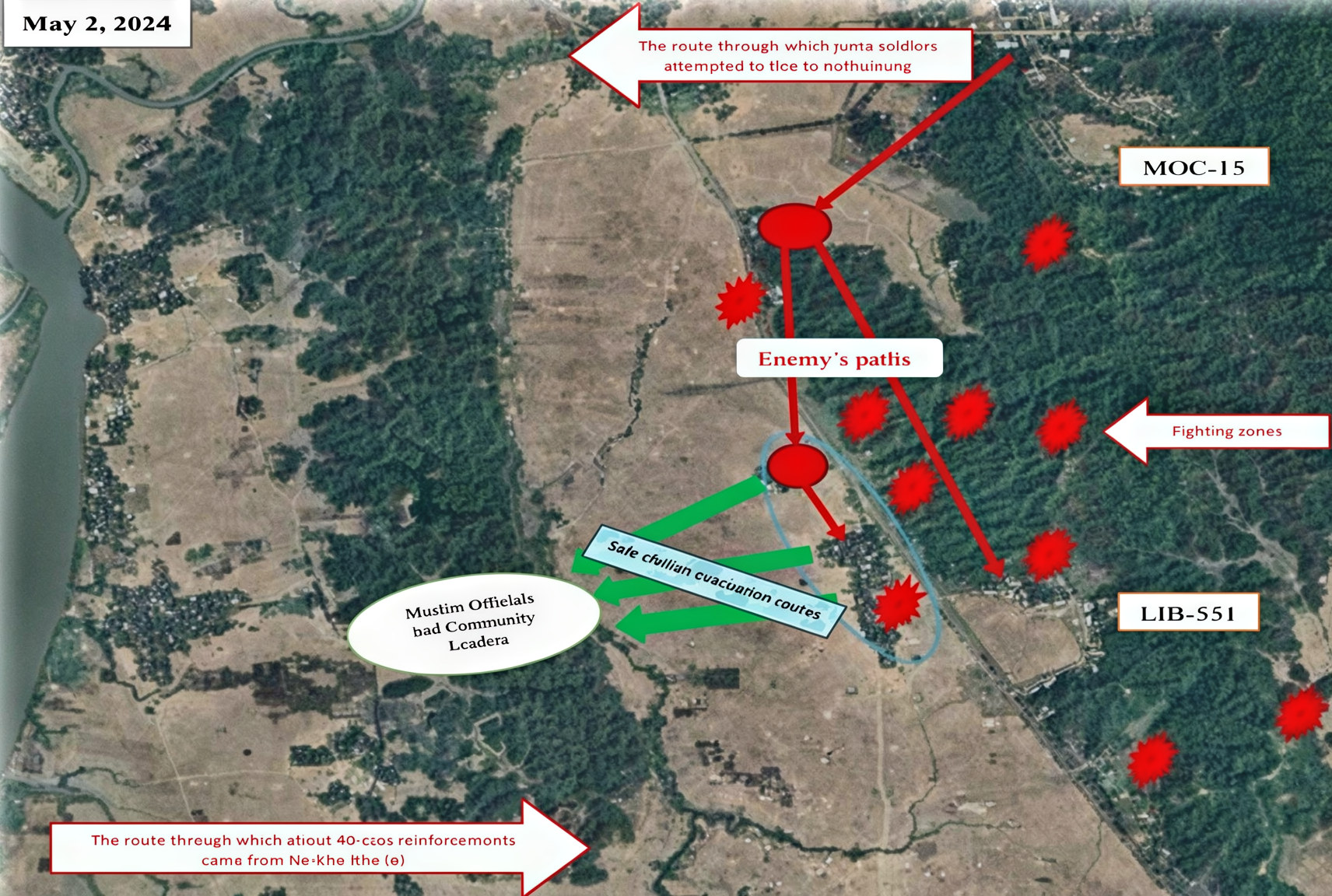
HDCO said its assessment was compiled using village and household registration records, population data, battlefield information, photographs, video footage, satellite imagery, field investigations, and testimonies collected from local residents.
The report stated that the United League of Arakan (ULA) contacted Human Rights Watch on May 20, 2026, requesting access to the list of alleged victims as well as the photographic and video evidence cited in HRW's report. According to HDCO, HRW declined to provide the materials, citing security concerns.
HDCO also argued that several international reports concerning the Htan Shauk Khan incident relied primarily on testimonies from individuals who had relocated to refugee camps in Bangladesh or to areas outside Arakan. The office said such accounts should be subjected to the same evidentiary verification standards applied to other sources.
Among its principal findings, HDCO said the evidence currently available does not substantiate allegations that the Arakan Army (AA) carried out a mass killing of civilians in Htan Shauk Khan Village.
The report described the area as the scene of intense multi-sided fighting between May 2 and May 4, 2024, involving AA forces, Myanmar military junta troops, local Muslim armed groups, the Arakan Rohingya Salvation Army (ARSA), and other armed actors.
Regarding population records, HDCO reported that Htan Shauk Khan had 933 permanent residents before the clashes. The office said that more than 910 residents were later accounted for in nearby villages within days of the fighting, while subsequent reviews identified up to 928 of the village's original inhabitants.
HDCO emphasized, however, that its findings should not be interpreted as proof that all humanitarian concerns have been resolved or that every allegation related to the incident has been conclusively addressed. The office called for continued examination of witness accounts, armed-group involvement, and reported casualties using consistent and impartial evidentiary standards.